


Heat Therapy for Performance & Recovery: Science-Backed Benefits and Best Practices
Published:
Written by: Susie Reiner, PhD, CSCS, ACSM-EP, TheoryEx
Reviewed by Therabody Scientists: Tim Roberts, MSc; Rachelle Reed, PhD, MS, ACSM-EP; Josh Adams, MS, CSCS
Heat therapy has been part of athletic preparation and recovery since long before it became a wellness trend. To best use heat for optimal results, it’s important to understand why it works, when it helps, and when it may hinder performance. The effects of heat depend on dose, timing, and context.
Here, we’ll take a research-driven look at how different forms of heat therapy influence circulation, neuromuscular function, tissue repair, and recovery, with practical guidelines for integrating them safely and intentionally into your training and recovery routine.
What is heat therapy?
Thermotherapy (or heat therapy) is a technique in which you intentionally heat the body for therapeutic benefit. The effects of heat therapy can vary widely based on how it’s applied, location, temperature, and duration.
Whole-body heating aims to heat the entire body and raise the body’s core temperature to improve blood flow, relax muscles, and alleviate pain. [1, 2] Some of the most common methods for whole-body heating include saunas, hot-water immersion (e.g., hot tubs), heated blankets, and infrared heating beds.
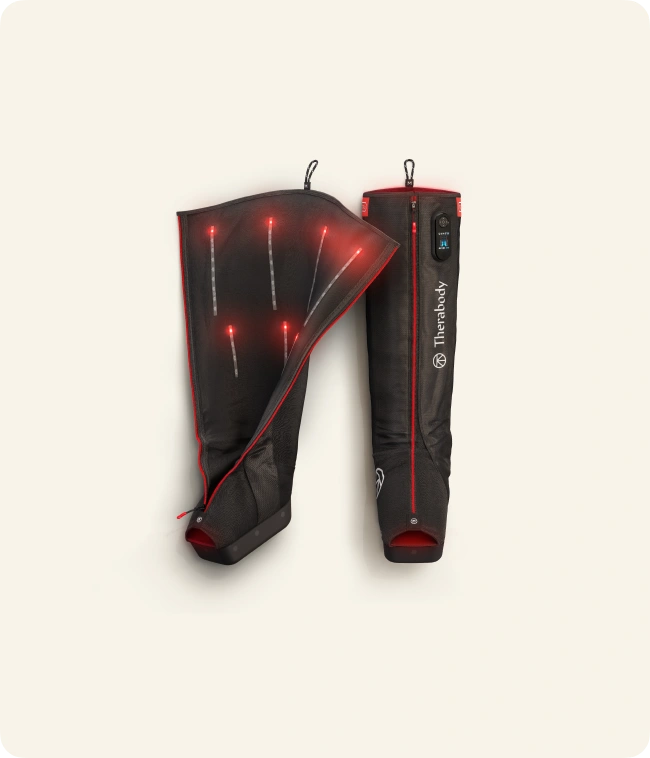
Localized heating targets specific regions of the body to achieve effects such as muscle relaxation, improved mobility, or pain relief. [6] Localized heat typically doesn’t raise core temperature to the same extent as whole-body heating, keeping effects more local to the muscle or tissue it is applied to. Some products provide heating alone (RecoveryTherm® Cube) while others combine heat with vibration (ThermBack LED), percussive massage (Theragun® PRO Plus), or cupping therapy (TheraCup) to provide additional benefits.
Different heating methods each have distinct effects.

Why use heat therapy?
Think of the body like a thermostat. When the temperature gets too high, the air conditioner kicks in to bring it back down. The body works the same way. The hypothalamus, a region of the brain, detects increases in body temperature and triggers responses to restore normal body temperature. Intentionally heating the body in controlled ways can leverage these responses and benefit the cardiovascular, muscular, and nervous systems. Influencing these systems can help enhance exercise performance and recovery.
How heat exposure promotes athletic performance
Efficient body cooling
Regular whole-body heat exposure, through sauna or hot tubs, has unique benefits for performance. As your body adapts to heat therapy, positive changes in plasma volume and built-in cooling mechanisms make it easier for you to efficiently cool down.
One of the body’s primary responses to heat is increased blood flow to the skin. As body temperature rises, the brain triggers vasodilation, or the widening of blood vessels, directing more blood to the skin. This allows heat to dissipate as warm blood reaches the surface and releases heat into the atmosphere through radiation and convection. Simultaneously, sweat glands release fluid to the skin’s surface, and as sweat evaporates, the water absorbs heat.
Repeated heat therapy promotes an increase in plasma volume, or the amount of fluid retained in your bloodstream. [3] This promotes increased stroke volume and enhances oxygen delivery to muscles during exercise.
Additionally, regular heat exposure also helps you maintain a stable core body temperature during exercise by training the body’s cooling mechanisms to work more efficiently. This not only delays fatigue during exercise but may also blunt the dangerous effects of overheating, especially in hot environments. Regular heat exposure causes you to sweat earlier and increases blood flow to the skin, improving performance in hot conditions. [4, 5]
Enhanced blood flow and circulation
Alongside increased blood distribution to the skin, localized heat exposure helps redirect blood flow to the muscles that it’s applied to — also called muscle perfusion — increasing oxygen and nutrient delivery, accelerating waste removal, and elevating muscle temperature. [6] These responses occur naturally during exercise to facilitate muscle contraction, and appropriate heating may enhance these effects. Increased local muscle tissue temperature can promote faster contraction and relaxation, enabling more rapid, powerful contractions than cooler muscles. [7, 8]
Warming up before exercise helps to improve the mechanism of muscle contractions, which enhances muscle explosiveness. While using heat should not replace a proper dynamic warm-up, it may be used synergistically to prime the body more rapidly. Strategically using heat, like adding heated percussive therapy, or a heating pad, may help to improve muscle perfusion prior to exercise, so your actual warm-up can focus more on muscle activation and mobility.
Try the “Lower Body Warm-Up” in our Therabody app, a 6-minute routine that activates the calves, quads, hamstrings, and gluteals.

Muscle performance and relaxation
Heat can influence the extent to which the nervous system can excite or relax a muscle, depending on its temperature and duration.
Small increases in muscle temperature (about 1-2°C above baseline) can enhance muscle performance during quick, explosive activities by promoting faster energy production and increasing neural excitability. [7, 8, 9] These changes are typically achieved with short bouts of localized heating (about 3-5 minutes). In this range, your muscles can contract and relax more quickly, helping you produce force faster during sprinting, jumping, or lifting. [7, 8, 9]
Heating muscle to higher temperatures or for longer durations (10-30+ minutes) shifts the response toward muscle relaxation and flexibility. Sustained heat reduces muscle stiffness and increases stretch tolerance, improving range of motion in the short- and long-term, especially when paired with stretching. [10, 11, 12, 13]
In practical terms, brief, moderate localized heat before training may help prime muscles for explosive performance, while longer or hotter exposures are better suited for post-training recovery, mobility work, or relaxation. This is why controlled, moderate temperature ranges are used in performance-oriented heating devices — high enough to meaningfully increase tissue temperature, but not so high or prolonged that they impair power output.

How heat promotes recovery after training
Repair and rebuild muscle tissue
Your body has a built-in response to stress. When challenged, it triggers a short-term inflammatory response designed to repair and adapt. For example, exercise creates microscopic damage to muscles, tendons, and connective tissues. This activates the immune system to clear the damage and rebuild stronger, more resilient tissue. [14]
Inflammation often gets a bad reputation, but the problem isn’t inflammation itself – it's when the body doesn’t return to baseline. Chronic, unresolved inflammation is associated with increased cardiometabolic risk. Acute inflammation, on the other hand, is a normal and necessary part of healing and adaptation. [15]
Heat therapy can support the body’s natural repair process by promoting blood flow to damaged areas, delivering key nutrients to tissue — an extension of the body’s normal response to stress. [6] Heat also stimulates the production of heat shock proteins, small molecules that help protect cells from stress and facilitate repair. [16, 17]
Heat may do more than support recovery after muscle damage. It may also help preserve muscle tissue during periods of reduced activity. Breaks from training due to injury, surgery, or illness can lead to muscle atrophy. Heat shock proteins, protective proteins your cells create in response to stress, help stabilize and repair other proteins inside the cell. Heat exposure increases the production of heat shock proteins and has been shown to help reduce muscle loss in certain contexts. [18]
Heat may also switch on cell pathways that promote muscle growth in the short term. Preliminary evidence shows increases in muscle mass when hot-water immersion is used following a resistance training session, compared to no bath and lukewarm water. [19] More research is needed to support its long-term benefits. [18, 20]
Cold therapy, another popular recovery tool, has been shown to reduce muscular adaptation when used immediately following strength training. [21, 22] Therefore, if your goal is to gain muscle and you’re deciding between heat and cold, choose heat.
Support blood flow and energy production
Heat therapy can help enhance the health benefits of endurance training.
Aerobic exercise promotes capillary growth around muscle tissues. More capillaries around muscles mean more pathways for blood cells to deliver oxygen and remove carbon dioxide, keeping muscles working for longer before reaching fatigue. Some studies show that localized [18] and whole-body heating [18, 23] increase capillary density around muscles when used frequently, potentially promoting oxygen delivery during exercise.
Endurance training helps muscles generate more mitochondria. More mitochondria = more energy and greater efficiency during exercise. Pairing endurance training with whole-body heat exposure can increase mitochondrial density and endurance exercise capacity. [2, 23]
Additional studies are needed to know exactly how heat affects performance, but emerging evidence suggests heat may complement regular endurance training.
Relieve pain and muscle soreness
Heat therapy can relieve pain, including chronic pain and acute muscle soreness from intense exercise.
Heating activates two types of sensory heat receptors in the body, which can draw attention away from pain signals. [12, 24] Patients with lower back pain have experienced short-term pain relief with heat wraps or heated blankets. [24, 25, 26]
When used post-exercise and for up to 24 hours afterward, heat can reduce the intensity and duration of delayed onset muscle soreness (DOMS), compared to using no heat. [27] Easing some of the pain and stiffness after a strenuous exercise session can facilitate a faster return to movement, which ultimately has the greatest impact on reducing DOMS.
Reduce stress and enhance sleep, relaxation, cognition, and long-term health
Heat therapy can be deeply relaxing. It increases parasympathetic nervous system activity [28] — the “rest and digest” part of your nervous system. A long-term study of sauna users shows that participants’ heart rates decrease, and heart rate variability increases about 30 minutes after sauna use, indicating stronger relaxation. [28]
Whole-body heat therapy also has long-term effects on deep relaxation. One study reported that 84% of participants experienced better sleep for up to 48 hours following heat exposure. [29] To maximize sleep benefits, use heat therapy several hours before sleep. Heating too close to sleep may make it harder to fall asleep as the body tries to cool down.
Other long-term effects of heat use have been shown. Regular sauna use has been linked to reduced cardiovascular disease risk and mortality. [29, 30, 31]
New research shows that repeated, controlled heat exposure improved performance on moderately complex cognitive tasks in hot conditions, particularly working memory accuracy and decision efficiency, with larger benefits observed after longer acclimation periods. [32] This suggests that heat exposure may support athletes’ physical tolerance to heat and clearer decision-making.

When not to use heat therapy
Heat therapy carries some performance and health risks that must be considered when deciding whether to use it in your routine. Below are three key considerations.
1. Exercise type: Appropriate heat exposure can promote mobility and neuromuscular performance in strength and power movements but can significantly worsen endurance performance before exercise. [7, 9]
2. Hydration and energy stores: To maintain your energy stores and stay hydrated in preparation for prolonged or strenuous endurance work, it’s best to engage in heat exposure on a separate day or several hours after a session.
3. Contraindications: Heat therapy that is too hot for too long may increase the risk of heat illness or injury. People with low or high blood pressure, heart disease, asthma, epilepsy, pregnancy, or mind-altering medications should consult with a healthcare provider prior to engaging with any form of heat therapy, as it can lead to complications.
Consult with a certified exercise professional and your healthcare provider before beginning a heat training program or engaging in regular whole-body heat therapy.
How to implement heat therapy in your routine
Hydrate: Dehydration is common during prolonged exposure to heat. To avoid serious health complications, drink plenty of fluid before and after your session.
Be mindful: If you experience burning, dizziness, or fainting, stop heat therapy immediately and seek medical attention. Always tell someone if you are going to a sauna or a hot tub.
Science-backed recommendations:
|
Heat modality |
Timing around training |
Potential benefits |
Duration |
Temperature guidance |
|
Sauna |
Post-exercise
*Can be used pre-exercise in small amounts |
Post-exercise: Central nervous system recovery, pain relief, tissue recovery
Pre-exercise: Increase or maintain core body temperature, improve circulation |
Post-exercise: Progress to 10-15 minutes
Pre-exercise: No more than 5 minutes |
|
|
Hot tub or hot bath |
Post-exercise |
Central nervous system recovery, pain reduction, circulation, tissue recovery |
10-15 minutes, no more than 20 minutes |
37–40°C [33] |
|
Heat packs |
Pre- or post-exercise |
Pre-exercise: Improve circulation and mobility
Post-exercise: Muscle recovery and pain relief |
Pre-exercise: No more than 5-10 minutes
Post-exercise: 20-45 minutes |
|
|
Theragun Plus Models |
Pre- or post-exercise |
Pre-exercise: Improve circulation and mobility
Post-exercise: Muscle recovery and pain relief |
Pre-exercise: 15-30 seconds per muscle Post-exercise: 30 seconds – 2 minutes per muscle |
Use the heat settings to your comfort level. |
|
ThermBack LED |
As needed |
Improve circulation, mobility, and relieve pain |
20-minute cycles |
Use the heat settings to your comfort level. |
|
RecoveryTherm Cube |
Pre- or post-exercise |
Pre-exercise: Improve circulation and mobility
Post-exercise: Muscle recovery and pain relief |
Pre-exercise: No more than 5-10 minutes
Post-exercise: 24-minute heat treatment preset |
Use the heat (and cold) settings to your comfort level. |
Key takeaways
- Heat therapy is a powerful tool for supporting performance and recovery, and its benefits depend on how it’s used.
- How often, temperature, type, and timing of the heat all determine its benefits. Your specific goals can help determine each variable.
- Short-duration, moderate heat can prime muscles for performance by improving mobility, neural readiness, and blood flow, whereas longer or hotter heating can support post-training recovery, pain relief, and relaxation.
- When applied intentionally, heat therapy can meaningfully support training, recovery, and overall performance, making it a valuable addition to your performance toolkit.
References:
- Turning up the heat on skeletal muscle adaptations and neuromuscular function: key considerations for passive heating prescription and best practices
- Combining cooling or heating applications with exercise training to enhance performance and muscle adaptations
- Effect of sauna-based heat acclimation on plasma volume and heart rate variability
- Core temperature and sweating onset in humans acclimated to heat given at a fixed daily time
- Heat acclimation improves cutaneous vascular function and sweating in trained cyclists
- Local Heat Therapy to Accelerate Recovery After Exercise-Induced Muscle Damage
- Contrasting effects of heat stress on neuromuscular performance
- Temperature and neuromuscular function
- The effects of acute heat exposure on muscular strength, muscular endurance, and muscular power in the euhydrated athlete
- Temperature affects maximum H-reflex amplitude but not homosynaptic postactivation depression
- The Inhibitory Thermal Effects of Focused Ultrasound on an Identified, Single Motoneuron
- Local Heat Applications as a Treatment of Physical and Functional Parameters in Acute and Chronic Musculoskeletal Disorders or Pain
- The effect of heat applied with stretch to increase range of motion: A systematic review
- Muscle damage and inflammation during recovery from exercise
- The anti-inflammatory effect of exercise
- Effects of icing or heat stress on the induction of fibrosis and/or regeneration of injured rat soleus muscle
- Turning Up the Heat: An Evaluation of the Evidence for Heating to Promote Exercise Recovery, Muscle Rehabilitation and Adaptation
- Skeletal muscle adaptations to heat therapy
- Effects of passive heating intervention on muscle hypertrophy and neuromuscular function: A preliminary systematic review with meta-analysis
- Six weeks of localized heat therapy does not affect muscle mass, strength and contractile properties in healthy active humans
- Post-exercise cold water immersion attenuates acute anabolic signalling and long-term adaptations in muscle to strength training
- Cold water immersion attenuates anabolic signaling and skeletal muscle fiber hypertrophy, but not strength gain, following whole-body resistance training
- Effects of repeated local heat therapy on skeletal muscle structure and function in humans
- Dry sauna therapy is beneficial for patients with low back pain
- A Cochrane review of superficial heat or cold for low back pain
- Effectiveness of treatments for acute and subacute mechanical non-specific low back pain: a systematic review with network meta-analysis
- The Efficacy of Sustained Heat Treatment on Delayed-Onset Muscle Soreness
- Recovery from sauna bathing favorably modulates cardiac autonomic nervous system
- A hot topic for health: Results of the Global Sauna Survey
- Clinical Effects of Regular Dry Sauna Bathing: A Systematic Review
- Association between sauna bathing and fatal cardiovascular and all-cause mortality events
- The effects of isothermic heat acclimation on simple and complex cognitive performance in the heat
- The multifaceted benefits of passive heat therapies for extending the healthspan: A comprehensive review with a focus on Finnish sauna
- A Role for Superficial Heat Therapy in the Management of Non-Specific, Mild-to-Moderate Low Back Pain in Current Clinical Practice: A Narrative Review